Meagan Pugh
Bio
Thus far, my artistic career has been a montage of visual experiments consisting various different mediums and subject matters. Yet, my strongest and best explored medium, which I have spent the majority of my schooling building upon, has been photography. Within this medium my work has continuously leaned towards the portrayal of urban environments. I have always found myself attracted to the aesthetic of more urbanized places. These places hold a history and portray the livelihoods of the people that have occupied them, almost, themselves, becoming living things with the ability to have character and change this character over time.
Keeping this in mind, the work that I have currently been working on is somewhat of a photographic memorial of my childhood. Of all the ways that I connect to my childhood, the most intense has been through the location where most of this time was spent. Being that I strongly believe that it is the experiences in one’s life which makes them who they are and as a visual person, the place and therefore the aesthetic where I grew up has been very important to me. Thus in my current work I am attempting to visually show my appreciation of this place. It is a place that is considered to be of little importance, ordinary, and even blue collar. Yet, to me, this place is romantic and layered with memories.
Through the lighting, layering, and texture of this work I am reaching out to others in hope to engage and bring them into a world that they would otherwise pass by. My hope is for the viewer to grasp a romantic and almost magical quality from the work, coupled with a sense of loss and stillness that the passing of time can often provide.


Friday, March 28, 2008


Alan Berliner
First, Let me say that I thought Berliner's Film "Nobody's Business" was awsome! Also, I thought that he seemed to be a great person overall. He was very personalble and seemed to be very intentive to the human connection. The subject matter that he seemed to be working most with, Family, is, in my opinion, a rather difficult subject to create good work out of. By this I mean, and as we have discussed in class, it is hard to make other people connect and care about "your" family and past. I is difficult to make your family/childhood interesting to others. Although, I absolutely love the subject matter he is working with and I myself am currently trying to create artwork from my hometown that is interesting to others.
I also thought it was amazing that he spent two whole decades of information and footage to make this film. It really shows his dedication to his artwork and his family. This dedication defiately showed in the film. The whole movie was so dynamic. The way that he drew information out of his father and drew his father's pesonality out, really made the movie.
I think the most interesting thing that was said in the film was "The one thing we (they) all share is the thing they know nothing about." (their ancesters and jewish culture)
I also thought it was amazing that he spent two whole decades of information and footage to make this film. It really shows his dedication to his artwork and his family. This dedication defiately showed in the film. The whole movie was so dynamic. The way that he drew information out of his father and drew his father's pesonality out, really made the movie.
I think the most interesting thing that was said in the film was "The one thing we (they) all share is the thing they know nothing about." (their ancesters and jewish culture)
Sunday, March 23, 2008
upland....

Geography
Upland is located at  (39.856762, -75.379429)[1].
According to the United States Census Bureau, the borough has a total area of 0.7 square miles (1.7 km²), all of it land.
Demographics
As of the census[2] of 2000, there were 2,977 people, 1,116 households, and 765 families residing in the borough. The population density was 4,439.0 people per square mile (1,715.6/km²). There were 1,216 housing units at an average density of 1,813.2/sq mi (700.7/km²). The racial makeup of the borough was 77.23% White, 19.68% African American, 0.30% Native American, 0.34% Asian, 0.81% from other races, and 1.65% from two or more races. Hispanic or Latino of any race were 2.08% of the population.
There were 1,116 households out of which 33.3% had children under the age of 18 living with them, 42.7% were married couples living together, 20.4% had a female householder with no husband present, and 31.4% were non-families. 26.7% of all households were made up of individuals and 12.3% had someone living alone who was 65 years of age or older. The average household size was 2.67 and the average family size was 3.28.
In the borough the population was spread out with 28.7% under the age of 18, 8.3% from 18 to 24, 27.9% from 25 to 44, 20.2% from 45 to 64, and 14.9% who were 65 years of age or older. The median age was 35 years. For every 100 females there were 89.0 males. For every 100 females age 18 and over, there were 84.3 males.
The median income for a household in the borough was $28,869, and the median income for a family was $35,640. Males had a median income of $31,188 versus $26,723 for females. The per capita income for the borough was $15,391. About 20.1% of families and 25.1% of the population were below the poverty line, including 46.3% of those under age 18 and 6.9% of those age 65 or over.
Saturday, March 22, 2008
Thoughts....
Okay, so I have been thinking and thinking about how to make my photos of upland more interesting/put my own spin on the whole "urban photography/sense of loss/home/night time/romantic" concept. I love some of these images. Probably not leaning toward the whole alphabet thing, but I just really liked it. The fading from night to day was awesome, I was thinking of even fading from black and white to color (past to present). I am also thinking of somehow putting myself in each of the images (maybe/probably) only as a shadow of some kind. Either way I am most-definitely moving ahead with this and really want to do the special transparency printing.


Urban Landscape Photography Tips
 Last week I was reading an issue of Digital Photographer Magazine (issue 50) which had a good feature on Urban Landscapes.
In it they interviewed an urban landscape photographer (Mark Bury) and asked him for his top 5 tips on his craft. I thought I’d share them here.
The headings are his the descriptions are my paraphrases of his tips combined with some of my own thoughts.:
1. Early Bird Catches the Worm - First thing in the morning is one of Mark’s favorite times to shoot for a number of reasons including that the light is diffused and the ’sky acts like a giant filter’. I’ve done a little urban photography too and also find that early morning shots can be great for a two other reasons too:
- Clean Streets - Most street cleaning happens over night and the early morning often finds urban scenes with less litter to clutter your shots.
- People Free Shots - Shots around dawn have less likelihood of being cluttered by people. It’s amazing who lonely a city can look if you’re able to get a people free shot.
- Different Activity - Of course you might want people in some of your shots - It’s amazing how an urban area can change depending upon who is around. While at 9 am you’ll get a peak hour feel to your shots and on the weekend at midday you might get a crowd of shoppers - in the wee hours of the morning there’s a whole different group of people wandering the streets can give your shots a whole new focal point.
2. Prospective Perspectives - Mark suggests that the shape of the buildings that you’re shooting should alter the way you frame your images. Buildings with domes should include background to help viewers appreciate it’s form and square buildings look best when shot at a 45-60 degree angle in Mark’s books.
3. Up and Coming - Don’t just photograph the finished product when it comes to buildings but also focus upon construction areas and what is being built and/or renovated.
4. Permission to Shoot - Some places don’t allow public photography and you might need to get a license and/or other form of permission to photograph them. Mark likens it to getting a model release when photographing people. Getting permission can mean the difference between owning copyright or not of the images you take in some instances. This will of course vary from place to place.
5. Angle Attack - Find new angles to photographing well known buildings. Find areas of them that are hidden from the average photographer and look for interesting patterns, shapes, textures, reflections and angles that highlight the details of the building that might have previously been missed by others.
Read our previous tutorial on photographing urban landscapes and submit your urban landscape shots to the Urban Decay Assignment in our fourms where the above photo was submitted by wbrag17 from Photos by Will.
Monday, March 17, 2008
These images (those below) are pushing towards completing the "killer" series. These are not finished but they are going in that direction. I am not sure if I like my models having their own clothes on or the white t-shirt to keep it consistent. Either way there will be more and presented with the picture of myself in army garb.


Thursday, March 6, 2008

I am in the process of finishing my "killer" pic series. Of the pictures I took, I am not positive, but now that I am really looking at them, I think that I am going to keep the individuals really plain/raw and just have them with the words on their chest.... no face paint or military reference. I think that my establishing picture says enough about the military issue and can support that issue throughout the rest of the images, therefore my models identity can shine through more and there can be more variety in that sense.
"killer" "sister" "mother" "friend" "lover" "co-worker" etc.
"killer" "sister" "mother" "friend" "lover" "co-worker" etc.
Todd Hido
So I just have to say that I love this guys work, even though this is probably really obvious. I just love the colors and lighting in his work. And most of all, I felt like I could really relate to his obsession with home and visually liking things that remind him of home. When he was talking about how he just really likes and deals well with the kind of grungy shabby beauty of the houses and parts of the world that are either old or of lower income, I totally connected with him. I have always felt that way and in many way my old neighborhood reminded me so much of the images he was showing. The painterly aspect of his pics really appeal to me and I am going to work really hard to get that look in a lot of my work.
Sunday, March 2, 2008


Direction
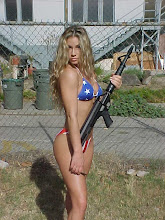
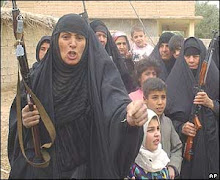
As we discussed my intent is to continue with my "killer" series, as well as continue coming up with scenes combining war like actions with "feminine" surroundings. Also though and one of the two prints I will be showing is the still romantic like images of night time urban landscapes. It seems funny to bring that in compared with everything else, but I really like these images, as well as enjoy taking them. I am curious to hear people's reactions/thoughts, if they think it is too romantic etc. I am not sure at the moment.
Subscribe to:
Comments (Atom)